Polymer Industry

کلاس درس مجازی دانشگاه های معتبر جهانی - خودم از بخش پلیمر خیلی استفاده کردم


براساس پروژه جدیدی که توسط برخی از معتبرترین دانشگاه های مطرح دنیا تعریف و طراحی گردیده است مقرر گردیده که برخی از دروس مهمترین دانشگاه های معتبر دنیا برای تمام دانشجویان علاقه مند ارائه گردد.
 
برای مثال فرض کنید که شما بعنوان یک دانشجوی ایرانی از داخل ایران می توانید بصورت کاملا رایگان در کلاس درس مکانیک سیالات دانشگاه MIT بنشینید و همچون دانشجویان این دانشگاه، از درس ارائه شده در این دانشگاه استفاده نمایید. 
 
برای مثال برای استفاده و شرکت در کلاس های درس های ارائه شده در دانشگاه MIT  می توانید از لینک زیر درس مورد نظر را انتخاب نمایید و در این کلاس همچون یک دانشجوی دانشگاه MIT (بصورت رایگان ولی بصورت مجازی ) شرکت نمایید:
 
 
برای این منظور تنها کافیست ابتدا دانشکده و رشته مورد نظر خود را انتخاب نموده و سپس از بین دروس ارائه شده درس مورد نظر خود را انتخاب کنید. با توجه به نوع درس انتخاب شده می توانید به فایل پی دی اف جزوات، پاورپوینت، تمرین های ارائه شده، و بعضا فیلم ویدئویی کلاس دسترسی داشته باشید.
 
و یا اینکه از لینک زیر می توانید از دروس ارائه شده در دانشگاه دلفت هلند برای دو مقطع لیسانس و فوق لیسانس از لینک زیر استفاده کنید (دروس ارائه شده در مقطع لیسانس در دانشگاه های هلند به زبان هلندی و دروس کارشناسی ارشد به زبان انگلیسی ارائه می گردند).
 
 
برای نمونه برای شرکت در درس "مدیریت منابع آب در مناطق شهری" ارائه شده در گروه مدیریت منابع آب دانشکده عمران این دانشگاه،  می توانید در این کلاس حضور یافته و از طریق لینک زیر از درس ارائه شده استفاده نمایید:
 
 
از کشور عزیزمان ایران نیز دانشگاه شهید بهشتی و چند مرکز تحقیقاتی دیگر در این طرح شرکت کرده اند که دروس ارائه شده در دانشگاه شهید بهشتی را می توان از لینک زیر پیدا نمایید:
 
 
سایت اصلی این پروژه نیز به آدرس زیر است که شما می توانید در قسمت جستجو، درس مورد نظر خود را جستجو نموده و از بین دانشگاه های معتبری که این درس را ارائه می نمایند دانشگاه مورد نظر خود را انتخاب نموده و در آن درس شرکت نمایید.


وقتی کسی چیزی با ارزش را با شما شریک می شود واز آن نفع می برید، وظیفه اخلاقی دارید که آن را با دیگران نیز شریک شوید.
+ نوشته شده در  سه شنبه سی و یکم اردیبهشت ۱۳۹۲ساعت 3:9  توسط Polymer Eng. Corp  | 

پلیمر های فعال الکتریکی (منبع Wikipedia) - مطالبی در پست های قبلی در این مورد درج شده است

Electroactive polymers

From Wikipedia, the free encyclopedia
Jump to: navigation, search
(a) Cartoon drawing of an EAP gripping device.
(b) A voltage is applied and the EAP fingers deform in order to surround the ball.
(c) When the voltage is removed the EAP fingers return to their original shape and grip the ball.

Electroactive Polymers, or EAPs, are polymers that exhibit a change in size or shape when stimulated by an electric field. The most common applications of this type of material are in actuators and sensors. A typical characteristic property of an EAP is that they will undergo a large amount of deformation while sustaining large forces.

The majority of historic actuators are made of ceramic piezoelectric materials. While these materials are able to withstand large forces, they commonly will only deform a fraction of a percent. In the late 1990s, it has been demonstrated that some EAPs can exhibit up to a 380% strain, which is much more than any ceramic actuator.[1] One of the most common applications for EAPs is in the field of robotics in the development of artificial muscles; thus, an electroactive polymer is often referred to as an artificial muscle.

History of EAPs

The field of EAPs emerged back in 1880, when Wilhelm Röntgen designed an experiment in which he tested the effect of an electrical current on the mechanical properties of a rubber band.[2] The rubber band was fixed at one end and was attached to a mass at the other. It was then charged and discharged to study the change in length with electrical current. M.P. Sacerdote followed up on Roentgen’s experiment by formulating a theory on strain response to an applied electric field in 1899.[2] It wasn’t until the year 1925 that the first piezoelectric polymer was discovered (Electret). Electret was formed by combining carnauba wax, rosin and beeswax, and then cooling the solution while it is subject to an applied DC electrical bias. The mixture would then solidify into a polymeric material that exhibited a piezoelectric effect.

Polymers that respond to environmental conditions other than an applied electrical current have also been a large part of this area of study. In 1949, Katchalsky et al. demonstrated that when collagen filaments are dipped in acid or alkali solutions they would respond with a change in volume.[2] The collagen filaments were found to expand in an acidic solution and contract in an alkali solution. Although other stimuli (such as pH) have been investigated, due to its ease and practicality most research has been devoted to developing polymers that respond to electrical stimuli in order to mimic biological systems.

It wasn’t until the late 1960s when the next major breakthrough in EAPs was observed. In 1969, Kawai demonstrated that polyvinylidene fluoride (PVDF) exhibits a large piezoelectric effect.[2] This sparked research interest in developing other polymers systems that would show a similar effect. In 1977, the first electrically conducting polymers were discovered by Hideki Shirakawa et al.[3] Shirakawa along with Alan MacDiarmid and Alan Heeger demonstrated that polyacetylene was electrically conductive, and that by doping it with iodine vapor, they could enhance its conductivity by 8 orders of magnitude. Thus the conductance was close to that of a metal. By the late 1980s a number of other polymers had been shown to exhibit a piezoelectric effect or were demonstrated to be conductive.

In the early 1990s, ionic polymer-metal composites were developed and shown to exhibit electroactive properties far superior to previous EAPs. The major advantage of IPMCs was that they were able to show activation (deformation) at voltages as low as 1 or 2 volts.[2] This is orders of magnitude less than any previous EAP. Not only was the activation energy for these materials much lower, but they could also undergo much larger deformations. IPMCs were shown to exhibit anywhere up to 380% strain, orders of magnitude larger than previously developed EAPs.[1]

In 1999, Yoseph Bar-Cohen, proposed the Armwrestling Match of EAP Robotic Arm Against Human Challenge.[2] This was a challenge in which research groups around the world competed to design a robotic arm consisting of EAP muscles that could defeat a human in an arm wrestling match. The first challenge was held at the Electroactive Polymer Actuators and Devices Conference in 2005.[2] Another major milestone of the field is that the first commercially developed device including EAPs as an artificial muscle was produced in 2002 by Eamex in Japan.[1] This device was a fish that is able to swim on its own, moving its tail using an EAP muscle. But the progress in practical development is not satisfactory.[4]

DARPA-funded research in the 1990s at SRI International and led by Ron Pelrine developed an electroactive polymer using silicone and acrylic polymers; the technology was spun off into the company Artificial Muscle in 2003, with industrial production beginning in 2008.[5] In 2010, Artificial Muscle became a subsidiary of Bayer MaterialScience.[6]

Types of Electroactive Polymers

EAP can have several configurations, but are generally divided in two principal classes: Dielectric and Ionic.

Dielectric EAPs

Dielectric EAPs, are materials in which actuation is caused by electrostatic forces between two electrodes which squeeze the polymer. Dielectric elastomers are capable of very high strains and are fundamentally a capacitor that changes its capacitance when a voltage is applied by allowing the polymer to compress in thickness and expand in area due to the electric field. This type of EAP typically requires a large actuation voltage to produce high electric fields (hundreds to thousands of volts), but very low electrical power consumption. Dielectric EAPs require no power to keep the actuator at a given position. Examples are electrostrictive polymers and dielectric elastomers.

Ferroelectric Polymers

Ferroelectric polymers are a group of crystalline polar polymers that are also ferroelectric, meaning that they maintain a permanent electric polarization that can be reversed, or switched, in an external electric field.[7][8] Ferroelectric polymers, such as polyvinylidene fluoride(PVDF), are used in acoustic transducers and electromechanical actuators because of their inherent piezoelectric response, and as heat sensors because of their inherent pyroelectric response.[9]

Figure 1: Structure of Poly(vinylidene fluoride)

Electrostrictive Graft Polymers

Figure 2: Cartoon of an electrostrictive graft polymer.

Electrostricive graft polymers consist of flexible backbone chains with branching side chains. The side chains on neighboring backbone polymers cross link and form crystal units. The backbone and side chain crystal units can then form polarized monomers, which contain atoms with partial charges and generate dipole moments, shown in Figure 2.[10] When an electrical field is applied, a force is applied to each partial charge and causes rotation of the whole polymer unit. This rotation causes electrostrictive strain and deformation of the polymer.

Liquid Crystalline Polymers

Main-chain liquid crystalline polymers have mesogenic groups linked to each other by a flexible spacer. The mesogens within a backbone form the mesophase structure causing the polymer itself to adopt a conformation compatible with the structure of the mesophase. The direct coupling of the liquid crystalline order with the polymer conformation has given main-chain liquid crystalline elastomers a large amount of interest.[11] The synthesis of highly oriented elastomers leads to have a large strain thermal actuation along the polymer chain direction with temperature variation resulting in unique mechanical properties and potential applications as mechanical actuators.

Ionic EAPs

  • Ionic EAPs, in which actuation is caused by the displacement of ions inside the polymer. Only a few volts are needed for actuation, but the ionic flow implies a higher electrical power needed for actuation, and energy is needed to keep the actuator at a given position. Examples of ionic EAPS are conductive polymers, ionic polymer-metal composites (IPMCs), and responsive gels. Yet another example is a Bucky gel actuator, which is a polymer-supported layer of polyelectrolyte material consisting of an ionic liquid sandwiched between two electrode layers consisting of a gel of ionic liquid containing single-wall carbon nanotubes.[12] The name is shaped by similatity on the name of the paper that can be made by filtering carbon nanotubes, the so called bucky paper.[13]

Electrorheological Fluid

Figure 3: The cations in the ionic polymer-metal composite are randomly oriented in the absence of an electric field. Once a field is applied the cations gather to the side of the polymer in contact with the anode causing the polymer to bend.

Electrorheological fluids change the viscosity of a solution with the application of an electric field. The fluid is a suspension of polymers in a low dielectric-constant liquid.[14] With the application of a large electric field the viscosity of the suspension increases. Potential applications of these fluids include shock absorbers, engine mounts and acoustic dampers.[14]

Ionic polymer-metal composite

Ionic polymer-metal composites consist of a thin ionomeric membrane with noble metal electrodes plated on its surface. It also has cations to balance the charge of the anions fixed to the polymer backbone.[15] They are very active actuators that show very high deformation at low applied voltage and show low impedance. Ionic polymer-metal composites work through electrostatic attraction between the cationic counter ions and the cathode of the applied electric field, a schematic representation is shown in Figure 3. These types of polymers show the greatest promise for bio-mimetic uses as collagen fibers are essentially composed of natural charged ionic polymers.[16] Nafion and Flemion are commonly used ionic polymer metal composites.[17]

Comparison of Electronic and Ionic EAPs

Dielectronic polymers are able to hold their induced displacement while activated under a DC voltage.[18] This allows dielectronic polymers to be considered for robotic applications. These types of materials also have high mechanical energy density and can be operated in air without a major decrease in performance. However, dielectronic polymers require very high activation fields (>10 v/um) that are close to the breakdown level.

The activation of ionic polymers, on the other hand, requires only 1-2 volts. They however need to maintain wetness, though some polymers have been developed as self contained encapsulated activators which allows their use in dry environments.[16] Ionic polymers also have a low electromechanical coupling. They are however ideal for bio-mimetic devices.

Characterization

While there are many different ways electroactive polymers can be characterized, only three will be addressed here: stress-strain curve, dynamic mechanical thermal analysis, and dielectric thermal analysis.

Stress-Strain Curve

Figure 4: The unstressed polymer spontaneously forms a folded structure, upon application of a stress the polymer regains its original length.

Stress strain curves provide information about the polymer’s mechanical properties such as the brittleness, elasticity and yield strength of the polymer. This is done by providing a force to the polymer at a uniform rate and measuring the deformation that results.[19] An example of this deformation is shown in Figure 4. This technique is useful for determining the type of material (brittle, tough, etc.), but it is a destructive technique as the stress is increased until the polymer fractures.

Dynamic mechanical thermal analysis (DMTA)

Both dynamic mechanical analysis is a non destructive technique that is useful in understanding the mechanism of deformation at a molecular level. In DMTA a sinusoidal stress is applied to the polymer, and based on the polymer’s deformation the elastic modulus and damping characteristics are obtained (assuming the polymer is a damped harmonic oscillator).[19] Elastic materials take the mechanical energy of the stress and convert it into potential energy which can later be recovered. An ideal spring will use all the potential energy to regain its original shape (no dampening), while a liquid will use all the potential energy to flow, never returning to its original position or shape (high dampening). A viscoeleastic polymer will exhibit a combination of both types of behavior.[19]

Dielectric thermal analysis (DETA)

DETA is similar to DMTA, but instead of an alternating mechanical force an alternating electric field is applied. The applied field can lead to polarization of the sample, and if the polymer contains groups that have permanent dipoles (as in Figure 2), they will align with the electrical field.[19] The permittivity can be measured from the change in amplitude and resolved into dielectric storage and loss components. The electric displacement field can also be measured by following the current.[19] Once the field is removed, the dipoles will relax back into a random orientation.

Applications of EAP

Figure 5: Cartoon drawing of an arm controlled by EAPs. When a voltage is applied (blue muscles) the polymer expands. When the voltage is removed (red muscles) the polymer returns to its original state.

EAP materials can be easily manufactured into various shapes due to the ease in processing many polymeric materials, making them very versatile materials. One potential application for EAPs is that they can potentially be integrated into microelectromechanical systems (MEMS) to produce smart actuators. As the most prospective practical research direction, EAPs have been utilized in artificial muscles.[20] Their ability to emulate the operation of biological muscles with high fracture toughness, large actuation strain and inherent vibration damping draw the attention of scientists in this field.[2]

In recent years, “electro active polymers for refreshable Braille displays”[21] has emerged to aid the visually impaired in fast reading and computer assisted communication. This concept is based on using an EAP actuator configured in an array form. Rows of electrodes on one side of an EAP film and columns on the other activate individual elements in the array. Each element is mounted with a Braille dot and is lowered by applying a voltage across the thickness of the selected element, causing local thickness reduction. Under computer control, dots would be activated to create tactile patterns of highs and lows representing the information to be read.

Small pumps can also be achieved by applying EAP materials. These pumps could be used for drug delivery, microfluidic devices, active flow control, and a multitude of consumer applications. The most likely configuration for a pump based on actuators would be a dual diaphragm device. The advantages that an ionomeric pump could offer would be low voltage (battery) operation, extremely low noise signature, high system efficiency, and highly accurate control of flow rate.[22]

Another technology that can benefit from the unique properties of EAP actuators is optical membranes. Due to their low modulus, the mechanical impedance of the actuators, they are well-matched to common optical membrane materials. Also, a single EAP actuator is capable of generating displacements that range from micrometers to centimeters. For this reason, these materials can be used for static shape correction and jitter suppression. These actuators could also be used to correct for optical aberrations due to atmospheric interference.[23]

Since these materials exhibit excellent electroactive character, EAP materials show potential in biomimetic-robot research, stress sensors and acoustics field, which will make EAPs become a more attractive study topic in the near future. They have been used for various actuators such as face muscles and arm muscles in humanoid robots.[24]

Future Directions

The field of EAPs is far from mature, which leaves several issues that still need to be worked on.[2] The performance and long-term stability of the EAP should be improved by designing a water impermeable surface. This will prevent the evaporation of water contained in the EAP, and also reduce the potential loss of the positive counter ions when the EAP is operating submerged in an aqueous environment. Improved surface conductivity should be explored using methods to produce a defect-free conductive surface. This could possibly be done using metal vapor deposition or other doping methods. It may also be possible to utilize conductive polymers to form a thick conductive layer. Heat resistant EAP would be desirable to allow operation at higher voltages without damaging the internal structure of the EAP due to the generation of heat in the EAP composite. Development of EAPs in different configurations (e.g., fibers and fiber bundles), would also be beneficial, in order to increase the range of possible modes of motion.

See also

reference is: Wikipedia

+ نوشته شده در  یکشنبه بیست و نهم اردیبهشت ۱۳۹۲ساعت 4:9  توسط Polymer Eng. Corp  | 

High Impact Polypropylene

جهت مشاهده ساختار EP افزوده شده بر PP اینجا را کلیک کنید. جهت مشاهده متن کامل مربوط به رفرنس این مطلب اینجا را کلیک کنید.

ّّFor visiting the EP added to PP in High Impact Polypropylene please click here. For visiting the full text of reference please click here.

by Ammar Ghasemian Azizi

+ نوشته شده در  یکشنبه بیست و نهم اردیبهشت ۱۳۹۲ساعت 3:32  توسط Polymer Eng. Corp  | 

self assembly groups  (reference of this text is http://www.polymer.fudan.edu.cn )

this field of study is interesting for me (Ammar Ghasemian Azizi):

reference of this below text is http://www.polymer.fudan.edu.cn

Representative Work (2004-2012)

Polymeric vesicles mimicking glycocalyx (PV-Gx) for studying carbohydrate-protein interactions in solution
Lu Su, Yu Zhao, Guosong Chen*, Ming Jiang

Glycocalyx, the carbohydrate coat on cell surface, has been proved particularly important in a variety of biological events. In this work, polymeric vesicle mimicking glycocalyx (PV-Gx), as a simplified model system, is achieved via our NCCM strategy, using dynamic covalent bond between phenylboronic acid and sugar as the non-covalent linkage. Dynamic light scattering (DLS) has been employed to monitor the binding process between the sugars on PV-Gx and three different lectins. The results clearly proved that the PV-Gx constructed from the polymers with well-defined sugar units is a promising platform for the study of carbohydrate-protein interactions in solution without fluorescent labeling of proteins.

Su L, Zhao Y, Chen GS, Jiang M. Polym. Chem., 2012, DOI:10.1039/C2PY20110K.

Self-assembly of particles—The regulatory role of particle flexibility
Kaka Zhang, Ming Jiang, Daoyong Chen*

Aspects of the self-assembly of particles, which uses nanometer or micrometer sized building blocks to bridge the gap between microscopic and macroscopic scales, are reviewed. Particle self-assembly has been the focus of considerable research in recent years because it can lead to superstructures with a complexity inaccessible by molecular self-assembly, and functionalities entirely different from or superior to those of the primary particles. Examples in molecular self-assembly suggests that anisotropic interactions could be useful in promoting particle self-assembly, with the exception of colloidal crystallization, which requires particles of uniform size and shape. Anisotropic particles prepared by surface modification of precursor particles are often rigid and submicron or micron sized, and thus relatively strong isotropic van der Waals interactions tend to resist self-assembly into regular superstructures. In addition, the relatively large contact area between particles needed for a sufficient binding enthalpy to stabilize a superstructure is difficult for rigid spherical particles. In contrast, flexible anisotropic polymeric particles dispersed in solvents have been shown to self-assemble into various superstructures. The flexibility of primary anisotropic particles enables them to fuse and stabilize into a superstructure. Some flexible and multicomponent particles that are isotropic in common solvents can undergo deformation and sufficient material redistribution to anisotropically self-assemble into regular superstructures in selective solvents. The self-assembly is also driven by anisotropic interactions, which is induced during self-assembly rather than in the particles as synthesized. This review focuses on recent achievements in soft particle self-assembly and describes briefly the advancements in rigid particle self-assembly. The presentation is divided into discussion of self-assembly by the colloidal crystallization of isotropic rigid particles, anisotropic rigid particles, anisotropic soft particles and isotropic soft particles, in that order.

Zhang KK, Jiang M, Chen DY. Prog. Polym. Sci. 2011, DOI:10.1016/j.progpolymsci.2011.09.003

Does PNIPAM block really retard the micelle-to-vesicle transition of its copolymer?
Kongchang Wei, Lu Su, Guosong Chen*, Ming Jiang*

Asymmetrically modified PNIPAM (Mw 10K), i.e. C12-PNIPAM-CA with a hydrophobic hydrocarbon chain -C12H25 (C12) at one end and a hydrophilic carboxyl group -COOH (CA) as the other, was prepared and found to form micelles with a core of the lightly associated hydrocarbon chains. When temperature is increased to the LCST of PNIPAM, the transformation from micelles to vesicles can be realized within 30 min, while the reverse process only takes a few minutes. Based on full monitoring of the transition process, it is proposed that the micelles serve as building blocks in constructing the vesicles via processes of combination, fusion, and etc., in which only local conformation adjustment of PNIPAM is involved.

Wei KC, Su L, Chen GS and Jiang M. Polymer, 2011, 52, 3647-3654.

Cyclodextrin-based Inclusion Complexation Bridging Supramolecular Chemistry and Macromolecular Self-Assembly
Guosong Chen, Ming Jiang*

In this invited review, we address how inclusion complexation has been employed and used to promote the recent developments in macromolecular self-assembly, especially with responsive functionalities. These include the amphiphilicity adjustment of macromolecules, non-covalent linkages for forming pseudo block copolymers and micelles, surface modification and functionalization of polymeric micelles and vesicles, and the combination of synthetic polymeric assemblies with biological moieties.

Chen GS, Jiang M*, Chem. Soc. Rev. 2011, 40, 2254-2266.

Photoresponsive Pseudopolyrotaxane Hydrogels Based on Competition of Host–Guest Interactions
Xiaojuan Liao, Guosong Chen, Xiaoxia Liu, and Ming Jiang*

A photo reversible hydrogel has been achieved via supramolecular competition. Briefly, a pseudopolyrotaxane Hydrogel formed by the inclusion complexation between α-cyclodextrin and poly(ethylene glycol) (PEG). After trans-azobenzene (trans-Azo) was added, the hydrogel transformed to solution because of the stronger binding ability of trans-Azo with α-CD than PEG. After UV light irradiation, trans-Azo isomerized to its cis form, which can not hold a-CD any more, which induced the formation of hydrogel again.

Liao XJ, Chen GS, Liu XX, Jiang M. Angew. Chem. Int. Ed. 2010, 49, 4409 –4413.

Dual Stimuli-Responsive Supramolecular Hydrogel Constructed by Hybrid Inclusion Complex (HIC) formation
Jianghua Liu, Guosong Chen, Mingyu Guo, Ming Jiang

A novel dual-responsive supramolecular hydrogel composed of an azobenzene (AZO) end- functionalized block copolymer PDMA-b-PNIPAM (AZO-(PDMA-b-PNIPAM)) and β-cyclodextrin-modified CdS quantum dot (β-CD@QD) has been demonstrated. Based on the host-guest inclusion complexation of AZO of the block copolymers and CD cavities on β-CD@QD, they form a hybrid inclusion complex (HIC). The inclusion complex and the domains of the collapsed PNIPAM chains serve as two distinct crosslinks and render the hydrogel excellent dual sensitivity to competitive hosts/guests substitution and to temperature variation.

Liu JH, Chen GS, Guo MY,  Jiang M. Macromolecules. 2010, 43, 8086-8093.

Non-covalently connected micelles (NCCMs): the origins and development ofa new concept
Mingyu Guo and Ming Jiang

Nearly ten years ago, we suggested a new concept of non-covalently connected micelles (NCCMs) to describe and name a novel family of polymeric micelles. In NCCMs the components that form the core and shell are connected by hydrogen bonding instead of the normal covalent bonding that exists in all micelles formed from block copolymers. Investigations by us, as well as by others, in recent years have shown that the concept of NCCMs, and the methodology to attain them, are in fact much broader than our original suggestion.

Guo MY and Jiang M.Soft Matter 2009, 5, 495-500

Functional nanohybrids self-assembly from amphiphilic calix[6]biscrowns and noble metals
Bing Guan, Qing Liang, Yuan Zhu, Minghua Qiao, Jiong Zou and Ming Jiang

One-dimensional nanohybrids made of organic templates of calixcrowns and in-situ formed metal nanoparticles were fabricated. The structure and catalytic properties of the hybrids were investigated.

点击放大

Guan B, Liang Q, Jiang M, et al.JOURNAL OF MATERIALS CHEMISTRY 2009,19, 7610-7613

Dual Reversible Self-Assembly of PNIPAM-Based Amphiphilies Formed by Inclusion Complexation
Jiong Zou, Bing Guan, Xiaojuan Liao, Ming Jiang, and Fenggang Tao

β-Cyclodextrin (β-CD)-ended linear poly(N-isopropylacrylamide) (β-CD-PNIPAM) and Frechet-type benzyl ether dendron with an azobenzene group (Gx-Azo) at the apex site form noncovalently connected amphiphiles (NCCAs) by inclusion complexation between the azo group and β-CD. The NCCAs self-assemble into vesicles in water. Optical switching of the assembly and disassembly is realized by alternating visible andUVirradiation, which causes the isomerization of the azo groups and their consequent complexation and decomplexation with β-CD. The structure and morphology of the vesicles were characterized by dynamic light scattering (DLS), static light scattering (SLS), SEM, TEM, and AFM. These photoresponsive vesicles can further respond to heat stimuli resulting in reversible aggregation and disaggregation of the vesicles.

点击放大

Zou J, Guan B, Jiang M, et al. Macromolecules 2009, 42, 7465-7473

Self-assembly of amphiphilic calix[6] crowns: from vesicles to nanotubes
Guan, B(官冰); Jiang, M(江明); Yang, XG(杨晓刚), et al.

In conclusion, to our knowledge, this communication presents the first e点击放大图片xample of a morphological transition from vesicles to nanotubes in self-assemblies of calixarenes. Unlike the remarkably broad and deep studies on self-assembly of block copolymers which started in the 1970’s, the investigation on self-assembly of the calixarenes is still at the very beginning. Great efforts are needed to exploit the relationship between the resultant morphologies and the structural parameters of the calixarenes, including the conformation of the framework, the structure and length of the attached hydrophilic chains etc, some of which is currently underway in our laboratory.

Guan, B; Jiang, M; Yang, XG, et al,SOFT MATTER  4(7)1393

Surface Modification of Polymeric Vesicles via Host-Guest Inclusion Complexation
Mingyu, Guo(郭明雨); Ming, Jiang(江明); Guangzhao, Zhang(张广照)

As schematically summarized in Scheme 2, a novel kind of vesicle, which is reactive in supramolecular chemistry, was prepared through β-CD-ended polyether imide in water. On both the outer and inner surfaces of the vesicles, β-CD cavities are available for further surface modification via inclusion complexation between β-CD and adamantane-monoended PEG. For Ada-PEG2K and Ada-PEG1.1K, both the inner andou点击放大图片ter surfaces can be fully modified whereas for Ada-PEG5K the inner surfaces can be only partially modified. We emphasis that our surface modification of the vesicles is completely based on supramolecular chemistry and thus the guest polymers are no covalently connected to the surfaces. This study opens a new, simple, mild avenue to the surface modification and functionalization of the vesicles, which of course would promote their applications in various areas.

Mingyu, Guo; Ming, Jiang; Guangzhao, Zhang,LANGMUIR   24(7)  10583

Polymer mortar assisted self-assembly of nanocrystalline polydiacetylene bricks showing reversible thermochromism
Gu, Y; Cao, WQ; Zhu, L, et al

In summary, reversible thermochromism was achieved in hierarchically self-assembled PVP/PDA nanoaggregates using a hydrogen-bonding-assisted NCCM approach. Intr点击放大图片iguingly, a “bricks and mortar” structure in PVP/DA nanoaggregates was obtained by annealing the sample at a temperature (65°C)
slightly higher than the melting point of pure DA crystals (63°C). After topochemical polymerization, the resultant PVP/PDA “bricks and mortar” structurewas further stabilized at high temperatures (up to 120°C). Contrary to pure irreversible PDA crystals, PVP-intercalated PDA nanoaggregates showed reversible
thermochromic transitions in both aqueous suspension and dry films. The cooperative interaction between PVP and PDA through tethering carboxylic acid head groups in the side chains of PDA to PVP layers via hydrogen bonding is believed to be responsible for reversible conformational transitions between the “red” and “blue” states. This study not only opens a new avenue for further understanding of reversible thermochromism in polydiacetylenes but also leads to more effective ways of preparing thermally reversible polydiacetylene-based materials utilizing commercially available polymers and diacetylene monomers.

Gu, Y; Cao, WQ; Zhu, L, et al, MACROMOLECULES 41(7)2299
Hydrogen-Bonded Dendronized Polymers and Their Self-Assembly in Solution
Xie D (谢荡), Jiang M (江明), Zhang GZ (张广照), Chen DY (陈道勇)

Frechet-type benzyl ether dendrons of second and third generations with a carboxyl group (G2, G3) at the apex site could attach to poly(4-vinylpyridine) (PVP), forming hydrogen-bonded dendronized polymers (HB denpols) in their common solvent, chloroform. 点击放大图片The HB denpols show unique self-assembly behavior, forming vesicles in the common solvent under ultrasonic treatment.The structure and morphologyof the vesicles were characterized by dynamic light scattering (DLS), static light scattering(SLS), SEM, TEM,and AFM. The size of the vesicles decreases and thethickness of the vascular membrane increases as the molar ratio of Gx/PVP increases. The hydrogen bonding, pi-pi aromatic stacking of the dendrons, and the considerable difference in architecture between the dendron Gx and PVP are themain factors facilitating the assembly of the HB denpols in the common solvent.
    Xie D, Jiang M, Zhang GZ, et al.  Chemistry-A European Journal 13 (12) 3346
 
One-Pot Synthesis of Amphiphilic Polymeric Janus Particles and Their Self-Assembly into Supermicelles with a Narrow Size Distribution
Nie L (聂磊), Liu SY (刘世勇), Shen WM (沈文明), Chen DY (陈道勇), Jiang M (江明)

 
Self-assembly of beta-casein and lysozyme
Pan, XY (潘晓贇); Yu, SY (俞绍勇); Yao, P (姚萍), et al.

Abstract The self-assembly of β-casein and lysozyme, a linear and a globular protein with isoelectric point of pH 5.0 and 10.7, respectively, was studied. Polydisperse electrostatic complex micelles formed when mixing β-casein and lysozyme aqueous solutions. After the micelle solution was heated, lysozyme ge点击放大图片lated and β-casein was trapped in the gel, producing narrowly dispersed nanoparticles. The nanoparticles were characterized with laser light scattering, ζ-potential, steady state fluorescence, atomic force microscopy, and transmission electron microscopy. The nanoparticles have spherical shape and their sizes depend on the pH of the heat treatment and the molar ratio of β-casein to lysozyme. The nanoparticles display amphoteric property and are relatively hydrophobic at pH around 5 and around 10. The net charges on the surface stabilize the nanoparticles in the solution.
    Pan, XY; Yu, SY; Yao, P, et al.   J. Colloid Interface Sci. 2007, 316 (2), 405
 
Micellization induced by the inclusion complexation between β-CD and adamantly group (ADA)
Jing Wang (王竞), Ming Jiang* (江明)

We developed a new route to fabricate non-covalently connected micelles (NCCM) of PGMA-CD/PtBA-ADA in aqueous media based on host-guest intera点击放大图片ction of β-CD and ADA. The presence of the β-CD cavities in the micellar shell provides broad opportunities to modify the micellar surface to meet different requirements in applications. Via shell-crosslinking and core-removal of the micelles, hollow spheres composed of β-CD-containing polymers were also obtained. These follow spheres possess multi-scale holes i.e. the large central one in size of 102 nm and many small β-CD cavities in 0.7 nm.
    Wang J, Jiang M   J. Am. Chem. Soc. 2006, 128, 3703
 
pH-Dependent Self-Assembly: Micellization and Micelle–Hollow-Sphere Transition of Cellulose-Based Copolymers
Hongjing Dou (窦红静), Ming Jiang* (江明)

The micellization of HEC-graft-poly(acrylic acid) (HEC-g-PAA),driven by the complexation between PAA grafts and HEC chains, and the transition between micelles and hollow spheres of in water were found to be pH-dependent and reversible.
点击放大图片

  Hongjing Dou, Ming Jiang, Huisheng Peng, et al. Angew.Chem.Int.Ed.,2003,42,1516
 
A Novel Route to Thermo-Sensitive Polymeric Core-shell Aggregates and Hollow Spheres in Aqueous Media
Youwei Zhang (张幼维), Ming Jiang* (江明)

The Poly(ε-carprolactone)(PCL)/Poly(N-isopropylacrylamide)(PNIPAM) core-shell particles was obtained by localizing the polymerization of NIPAM and crosslinker 点击放大图片methylene bisacrylamide around the surface of the PCL nanoparticles. The resultant particles were converted to hollow spheres by simply degradating the PCL core with enzyme. The attained hollow spheres is thermo-sensitive and displays reversible swelling and de-swelling around 32℃.

     Youwei Zhang, Jiang Ming et.al. Adv.Funct.Mater. 2005,15,695

 
Optical Switching of Self-Assembly: Micellization and Micelle–Hollow Sphere Transition of Hydrogen-Bonded Polymers
Xikui Liu (刘习奎), Ming Jiang*(江明)

The work reports reversible optical switching of micellization and micelle-hollow sphere transition in a blend solution of poly(4-phenylazomaleinanil- co-4-vinyl pyridine) (AzoMI-VPy) and carboxyl-ended polybutadiene CPB. Under UV irradiation, the trans-azobenzene units transformed into polar cis conformation and made AzoMI-VPy insoluble. Thus micelles formed with (AzoMI-VPy) core stabilized CPB shell through interpolymer hydrogen bonding. Upon visible light irradiation, the micelles quickly disassociated due to the cis form returning to 点击放大图片trans form. After core crosslinking, the micelles showed a reversible morphology change responding to light irradiation: visible light caused the formation of hollow spheres due to the core dissociation as a result of cis azobenzene turning to trans while UV light made the hollow spheres return to micelles due to the isomerization in the opposite direction.
     Xikui Liu, Ming Jiang Angew.Chem.Int.Ed 2006, 45, 3846

Preparation of Core-Stabilized Polymeric Micelles with a Mixed Shell Formed by Two Incompatible Polymers
Taoran Hui (惠陶然), Daoyong Chen* (陈道勇), Ming Jiang

The preparation of core-stabilized micelles with PEO/PS as th点击放大图片e shell by directly cross-linking P2VP in PS-b-P2VP and PEO-b-P2VP mixture in DMF, which is the common solvent of the block copolymers, using 1,4-dibromobutane as the cross-linker. Although the PEO chains and the PS chains are strongly incompatible, the cross-linking of P2VP blocks connects both the PEO and the PS chains to a common core and enables the sufficient mixing of the unlike blocks in the shell.

      Taoran Hui, Daoyong Chen et.al. Macromolecule.2005,38,5834
 
Short-life core-shell structured nano-aggregates formed by the self-assembly of PEO-b-PAA/ETC (1-(3-dimethylaminopropyl) -3-ethylcarbodiimide methiodide) and their stabilization
Chunfeng Gu (顾春锋), Daoyong Chen* (陈道勇), Ming Jiang

点击放大图片The self-association takes place in the aqueous solution of PEO-b-PAA/ETC at the early stage of the reaction between PAA and ETC. Due to the reaction cycle of ETC with PAA (as indicated in the scheme), the aggregates have a limited life in water. After staying unchanged for several days in the aqueous solutions, the aggregates dissociate and finally disappear 1 to 3 weeks after their formation.

     Chunfeng Gu, Daoyong Chen et.al. Macromolecule.2004,37,1666

 
Self-assembly Based on Biomacromolecules
Shaoyong Yu (喻绍勇), Xiaoyun Pan (潘晓赟), Ping Yao*, Ming Jiang

A new method was developed to produce nanogels with oppositely charged protein pairs or protein-polysaccharide pairs, such as chitosan-ovalbumin and ovalbumin-lysozyme pairs. The na点击放大图片nogels have core-shell structure. The dispersibility, the size and the hydrophobicity / hydrophilicity of the nanogels are pH responsible. Left figure is an illustration of the charge change of ovalbumin-lysozyme nanogels at different pH.Casein-g-dextran copolymer was prepared through the Maillard reaction. The copolymers form micelles at the pI of casein and the micelles dissociate when pH is away from t点击放大图片he pI. β-carotene can induce the copolymer micellization through hydrophobic interactions during the β-carotene encapsulation procedure.


   Yu SY, Yao P, Jiang M, et al. Biopolymers 2006, 82, 148
   Pan XY, Yao P, Jiang M, et al. J. Colloid and Inteface 2007, 315, 456
 
Interactions of Apo Cytochrome c with Alternating Copolymers of Maleic Acid and Alkene
Li Liang(梁丽), Ping Yao*, Ming Jiang
The interactions of apo cytochrome c (apo cyt c) with poly(isobutylene-alt-maleic acid) (PIMA) and poly(1-tetradecene-alt-maleic acid) (PTMA) lead to点击放大图片 apo cyt c a conformational change from random coil to -helical structure. The -helix content is influenced by the copolymer concentration, the length of alkyl chain of the copolymers, and media pH. The interactions of PIMA or PTMA with apo cyt c at neutral and alkali pH destroy the hydrophobic aggregation of PTMA or apo cyt c and form new complex particles.


    Li Liang, Ping Yao, et.al. Langmuir.2005,21,10662

  以上工作简介中,图片均可点击放大查看,已经发表的工作均可点链接下载。因为图片较多,所以打开网页速度会较慢,请耐心等待。
 
江明、陈道勇、姚萍联合课题组代表作


这里我们选择10篇代表性论文作简单交流,由此可以对我组研究工作的过去和现状有一个初步的了解。请点击文章名下载,下载之前请先安装Adobe AcrobatReader

1. Ming Jiang, Hankun Xie
Miscibility and Morphology in Copolymer/homopolymer Blends, Prog.Polym.Sci.1991,16,977
本组建立伊始,研究由均聚物/嵌段共聚物的相容性问题起步,积5-6年研究成果,提出此类共混物相容性的“共聚物链构造效应”(chain-architectural effect),本组成果及国际学术界在此领域于八十年代的进展均总结于此文中。

2. Ming Jiang, Mei Li, Maoliang Xiang, Hui Zhou
Interpolymer Complexation and Miscibility Enhancement by Hydrogen Bonding, Adv.Polym.Sci.1999,146,121
九十年代初我组工作重点在高分子间的特殊相互作用和相容性的关系方面,该研究导致了我们逐渐形成和提出了“不相容-相容-络合转变”的概念。在此思想指导下对可控氢键体系的高分子间的络合展开了系统性研究,本文就这方面研究成果进行了总结。

3. Guangzhao Zhang, Ming Jiang, Chi Wu et al.
Formation of Novel Polymeric Nanoparticles, Acc.Chem.Res.2001,34,249,
我组于1995年发现含少量离子基团的碳氢链聚合物可在水中形成稳定的surfactant-free nanoparticle,其后,我们与吴奇教授合作对此类纳米粒子的形成规律作了深入研究。有关成果总结在这篇评述中。

4. Mei Li, Ming Jiang, Yunxiang Zhang, Qiu Fang,
Fluorescence Studies of Hydrophobic Association of Fluorocarbon-modified Poly(N-isopropylacrylamide), Macromolecules,1997,30,470
九十年代中期我组与中科院有机所章云祥教授就改性水性聚合物hydrophobic association 的问题开展了研究,本文是这方面成果的代表作。文章提出,经碳氟链修饰的Pyrene可以用为表征碳氟链改性的水溶性高分子的“靶向探针”,此文迄今被引用了62次。我们建议的探针已被法国和日本几个实验室用于多种碳氟微区的研究。

5.Min Wang, Guangzhao Zhang, Daoyong Chen, Ming Jiang,
Noncovalently Connected Polymeric Micelles Based on a Homopolymer Pair in Solutions, Macromolecules,2001,34,7172
Min Wang, Ming Jiang, Fangnin Ning, Daoyong Chen, Shiyong Liu, Hongwei Duan
Block-copolymer-free Strategy for Preparing Micelles and Hollow Spheres: Self-assembly of Poly(4-vinylpyridine) and Modified polystyrene, Macromolecules,2002,35,5980
在新世纪,本组的工作重点由高分子络合物转向了大分子自组装,目标是寻求获得规则纳米结构的新途径。以上两篇文章就是通过高分子间的氢键作用获得核-壳间非共价键合胶束(NCCM)的代表性文章。利用核-壳间无共价键特性,我们还在壳交联后将核溶解,在我组第一次获得聚合物空心球。

6. Hongwei Duan, Daoyong Chen, Ming Jiang, et al.
Self-assembly of Unlike Homopolymers into Hollow Spheres in Nonselective Solvent, J.Am.Chem.Soc.2001, 123,12097
刚性链在高分子组装中有独特的作用,本文证实,刚性聚酰亚胺和聚乙烯基吡啶在两者间的氢键相互作用和刚性链的规则排列倾向的驱动下,在其共同溶剂中,自组装为纳米空心球。此项成果开拓了我组刚性链作为组装单元的多方面的研究。

7.Xiaoya Liu, Ming Jiang, et al.
Micelles and Hollow Nanospheres Based on Epsilon-caprolactone-containing Polymers in Aqueous Media, Angew.Chem.Int.Ed.2002,41,2950
聚己内酯(PCL)和带PCL支链的水溶性高分子在水中可自组装为纳米球,经水溶性高分子主链的交联和PCL的酶降解,我们得到了空心球,这是高分子自组装的又一新途径。

8. Hongjing Dou, Ming Jiang, Huisheng Peng, et al.
pH-dependent Self-assembly: Micellization and Micelle-hollow-sphere Transition of Cellulose-based Copolymers, Angew.Chem.Int.Ed.,2003,42,1516
利用羟乙基纤维素和聚丙烯酸的接枝共聚物中主链和支链间的络合和解络合,我们成功地实现了它们在水中的胶束化和胶束-空心球转变,这两个过程都受pH控制。这一组装体系具有水溶性,可降解性,生物相容性,环境敏感性等多项特征。

9.Daoyong Chen, Huisheng Peng, Ming Jiang
A Novel One-step Approach to Core-stabilized Nanoparticles at High Solid Contents, Macromolecules,2003,36,2576
嵌段共聚物的胶束化通常只能在低浓度下实现,这大大限制了它的应用。本文提出,嵌段共聚物在共同溶剂中加入一种嵌段的交联剂,通过交联反应诱导胶束化。由于“非交联嵌段的屏蔽效应”,交联反应可在高浓度下(~10%)进行,导致纳米核交联胶束的形成,而避免了整体交联。这一途径已被证明有普遍意义。

10. Jie Gong, Ping Yao, Hongwei Duan, Ming Jiang, Shaohua Gu, Lijuan Chunyu
Structural Transformation of Cytochrome C and Apo Cytochrome C Induced by Sulfonated Polystyrene, Biomacromolecules, 2003,4,1293
我组近年来开拓了合成高分子/生物大分子相互作用研究的新方向,目前着重于合成高分子形成的多种微环境对蛋白质分子折叠的影响。本文是这一研究方向在Biomacromolecules上发表的第一篇文章。

+ نوشته شده در  یکشنبه بیست و دوم اردیبهشت ۱۳۹۲ساعت 17:47  توسط Polymer Eng. Corp  | 
پلیمریزاسون متالوسن ( متالوسن کاتالیست ) - Metallocene polymerization ( Metallocene Catalyst)

Metallocene polymerization is making a big stir in the plastics business. It's making a stir because it's the hottest thing to hit vinyl polymers since the invention of Ziegler-Natta polymerization. So what's all the song and dance surrounding this stuff about? The reason for all the fuss is that metallocene catalysis polymerization allows one to make polyethylene that can stop bullets! This new polyethylene is better than Kevlar for making bullet proof vests. It can do this because it has a much higher molecular weight than polyethylene made by the Ziegler-Natta recipe. How high, you ask? Up to six or seven million, that's how high!

There's more here than high weights. Metallocene polymerization is also good for making polymers of very specific tacticities. It can be tuned to make isotactic and syndiotactic polymers, depending on what you need.

Yes, it's great. What is it?

I knew I couldn't dodge this question forever. I could say simply, metallocene polymerization is polymerization catalyzed by metallocenes.

Big deal. What's a metallocene?

I figured you'd want to know that. Again, I could give simple answer that a metallocene is a positively charged metal ion sandwiched between two negatively charged cyclopentadienyl anions.

Big deal. What's a cyclopentadienyl anion?

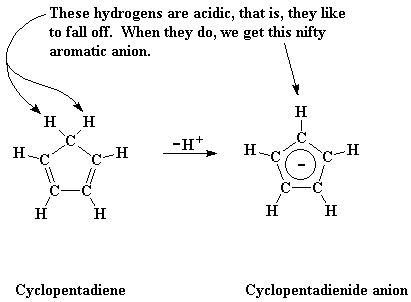
My what an inquisitive mind you have! And your inquisitiveness will not go unrewarded! I will tell you that a cyclopentadienyl anion is a nifty little ion that's made from a little molecule called cyclopentadiene. I'm guessing you're just about to ask what that is, so I put a little picture of it right down below:

You may notice that most of the carbon atoms have one hydrogen, but one carbon atom has two hydrogens. One of those two hydrogens are acidic, that is, one will fall off very easily. When this happens, it leaves its bonding electrons (that is, an electron pair) behind. So the carbon it left now has only one hydrogen, just like the others, plus an extra pair of electrons.

Don't you just hate it when you've got extra electrons and nothing to do with them?

But this is not the case with cyclopentadiene, fear not! See those two double bonds in the molecule? Each of those has two electrons, remember, making four in all. Add those two extra electrons on the carbon that lost the hydrogen, and we have six.

This is important. Six electrons in a ring molecule like this will make the ring aromatic. If you've had enough organic chemistry to know what this means, great! If you haven't just know that it means the ring in this anionic form will be very stable.

Got that?

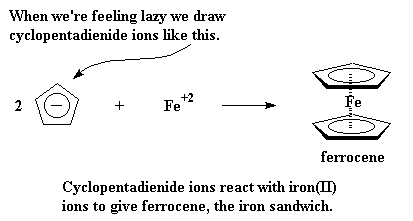
These cyclopentadienide ions have a charge of -1, so when a cation comes along, like Fe with a +2 charge, two of the anions will form an iron sandwich. That iron sandwich is called ferrocene.

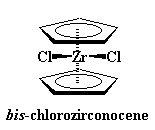
Sometimes a metal with a bigger charge is involved, like zirconium with a +4 charge. To balance the charge, the zirconium will bond to two chloride ions, -1 charge on each, to give a neutral compound.

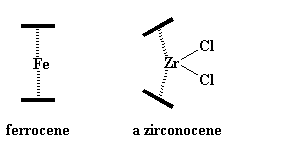
Zirconocenes are a little different from ferrocene. You see, those extra ligands, the chlorines, take up space. It's hard for them to squeeze in-between the cyclopentadienyl rings. So to make room for the chlorines, the rings become tilted with respect to each other, opening like a clam shell. This gives the chlorines space to breathe. Take look at the picture showing this tilt:

As you can see, the cyclopentadienyl rings, shown as the thick dark lines, are parallel to each other in ferrocene, but make an angle in zirconocene. This tilting happens whenever a metallocene has more ligands than just the two cp rings.

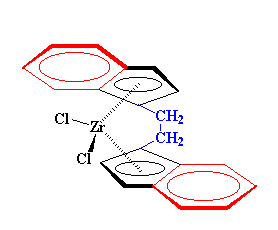
We can use some derivatives of bis-chlorozirconocene to make polymers. Take this one for example:

It's different from bis-chlorozirconocene in that each cp ring has a six-carbon aromatic ring fused to it, shown in red. This two-ring system made of a cp ring fused to a phenyl ring is called an indenyl ligand. Plus, there's an ethylene bridge, drawn in blue, that links the top and bottom cp rings. These two features make this compound a great catalyst for making isotactic polymers. You see, the big bulky indenyl ligands, pointed in opposite directions as they are, guide the incoming monomers, so that they can only react when pointed in the right direction to give isotactic polymers. That ethylene bridge holds the two indenyl rings in place. Without the bridge, they could swivel about and might not stay pointed in the right way to direct isotactic polymerization.

The Polymerization

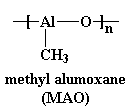
We've talked about what metallocenes are, and a little about why they can make polymers with a specific tacticity. But we haven't talked about how the polymerization actually works. Fear not, for that's what we're going to talk about right now. To make our zirconocene complex catalyze a polymerization, the first thing we have to do is add a pinch of something called MAO. This compound was not discovered by the late Chinese dictator Mao Zedong as some of you might be guessing. Rather, MAO is short for methyl alumoxane. Wouldn't you know it, MAO is itself a polymer, with a structure like this:
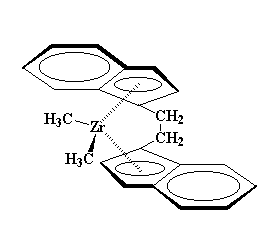
It's an unusual polymer because it has metal atoms in the backbone. But we're more interested in what it does than what it is. To get our catalyst to work, we need to use a whole bunch of MAO, almost 1000 times the amount of catalyst. The MAO is going to do something with the chlorines of our zirconocene. You see, those chlorines are what we call labile. That is to say, they like to fall off of the zirconocene. So MAO can replace them with some of its methyl groups. We're left with a catalyst that looks like this:
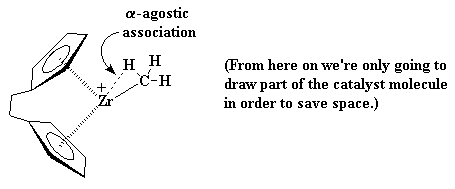
Wouldn't you know it, the methyl groups can fall off, too. When one of them falls off, we get a complex that looks like this:
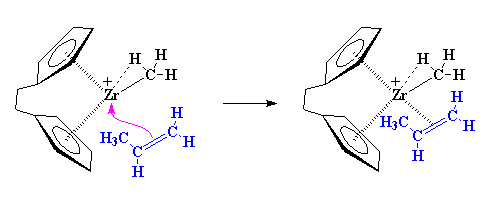
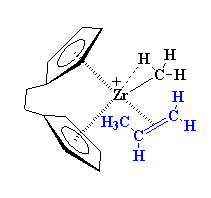
You'll notice in the picture that the positively-charged zirconium is stabilized because the electrons from the carbon-hydrogen bond are shared with the zirconium. This is called α-agostic association. But still, the zirconium is lacking in electrons. It needs more than just a wimpy agostic association to satisfy it. That's where our olefin monomer comes in. Imagine an alkene like propylene. Its carbon-carbon double bond is loaded with electrons to share. So it shares a pair with the zirconium, and, at least for now, everyone will be satisfied.
But complexation is a rather complicated process, not nearly as simple as this picture implies. If you already know how this works, you can skip the next section, and go straight to the polymerization. If not, read on, and learn how the complexation works.

Learn about alkene-metal complexation


Skip to the polymerization

Alkene-metal complexes

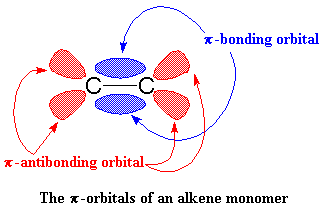
This is where it starts to get interesting. Suppose at this point that a vinyl monomer showed up, let's say, a molecule of propylene. The zirconium is going to enjoy this. To understand why, let's take a look at vinyl monomer, specifically, its double bond. A carbon-carbon double bond, is made up of a σ bond and a π bond. We're going to take a closer look at that π bond.
Take a look at the picture and you'll see that the π bond consists of two π-orbitals. One is the π-bonding orbital (shown in blue) and the other is the π-antibonding orbital (shown in red). The π-bonding orbital has two lobes sitting between the carbon atoms, and the π-antibonding orbital has four lobes, sticking out away from the two carbon atoms. Normally the pair of electrons stays in the π-bonding orbital. The π-antibonding orbital is too high in energy, so under normal circumstances it's empty.

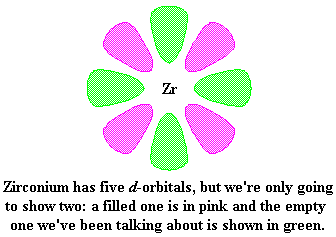
Let's look again at zirconium for a moment. This picture shows zirconium and two of its d-orbitals. Now to be sure, zirconium has five d orbitals, but we're only going to show two right now for clarity.

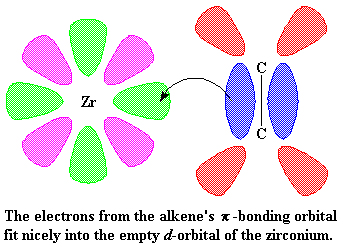
One of the d-orbitals which we've shown is that empty orbital. It's made of the green lobes. The pink lobes are one of the filled d-orbitals. That empty d-orbital is going to look for a pair electrons, and it knows just where to look. It knows that the alkene's π-bonding orbital has a pair that it will share. So the alkene's π-bonding orbital and the zirconium's d-orbital come together and share a pair of electrons.
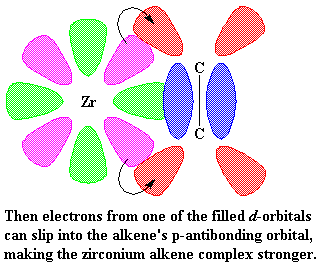
But once they're together, that other d-orbital comes mighty close to that empty π-antibonding orbital. So the d-orbital and the π-antibonding orbital share a pair of electrons, too.
This additional sharing of electrons makes the complex stronger. This complexation between the alkene and the zirconium sets things up for the next step of the polymerization.

The Polymerization

The precise nature of the complex between the zirconium and the propylene is complicated. So to make things simple we're going to just draw it like we did earlier from now on, like this:
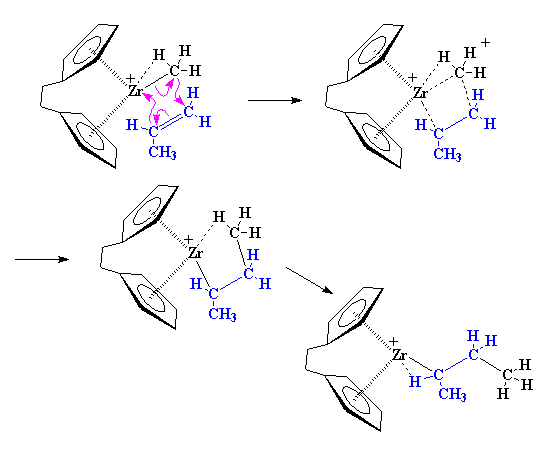
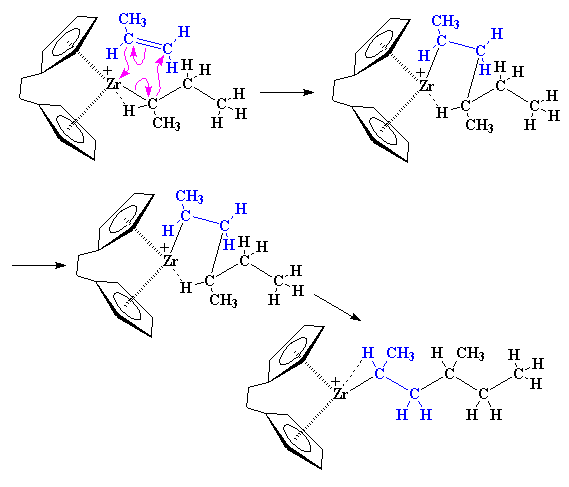
This complexation stabilizes the zirconium, but not for long. You see, when this complex forms, it can rearrange itself into a new form. Electrons start to move, as you see in the picture below. The electrons in the zirconium-methyl carbon bond shift, to form a bond between the methyl carbon and one of the propylene carbons. Meanwhile, the electron pair that had been forming the alkene-metal complex shifts to form an outright bond between the zirconium and one of the propylene carbons.
As you can see in the picture, this happens through a four-membered transition state. As you can also see, the zirconium ends up just like it started, lacking a ligand, but with an agostic association with a C-H bond from the propylene monomer.

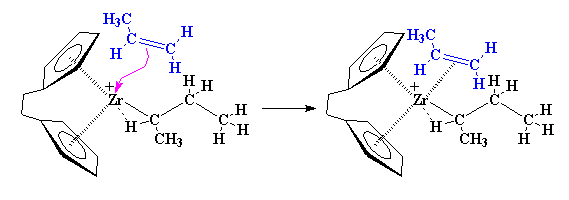
Being back where we started, another propylene monomer can come along and react just like the first one did.

The propylene coordinates with the zirconium...then the electrons shuffle:
When we're done a second propylene monomer has added to the chain. Notice that we end up with an isotactic polymer; the methyl groups are always on the same side of the polymer chain. As you might predict, the next monomer that comes along will coordinate with zirconium on the same side as the first. The direction of approach switches with each monomer added.

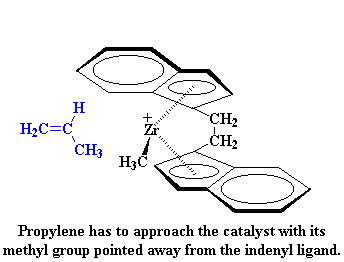
So why do we get an isotactic polymer? Let's look at the catalyst and an incoming propylene monomer for a minute. As you can see, the propylene monomer always approaches the catalyst with its methyl group pointed away from the indenyl ligand.

If the methyl group were pointed toward the indenyl ligand, the two would bump into each other, keeping the propylene from getting close enough to the zirconium to form a complex. So, only when the methyl group is pointed away from the indenyl ligand can the propylene complex with zirconium.

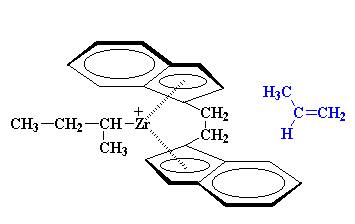
When the second monomer is added, it has to approach from the other side, and it also has to point its methyl group away from indenyl ring:

But notice that this means the methyl group is pointed up rather than down. Because the second propylene is adding from the opposite side as the first, it must be pointed in the opposite direction if the methyl groups are going to end up on the same side of the polymer chain. (Think about this awhile and it should make sense.)

Ok folks, this brings up a question. Knowing why this catalyst gives isotactic polypropylene, what kind of catalyst would give syndiotactic polypropylene?

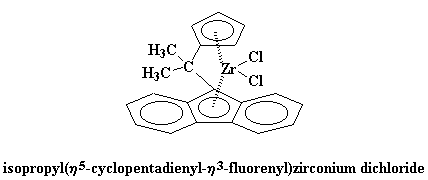
Have you figured it out yet? It's a catalyst such as this bad boy, which was investigated by Ewen and Asanuma.

I think you can figure out why we get syndiotactic polymerization from this catalyst. Successive monomers approach from opposite sides of the catalyst, but they're always pointing their methyl groups up. This way, the methyl groups end up on alternating sides of the polymer chain.

Identity Crisis

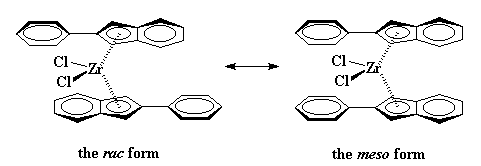
But metallocene catalysts can do even stranger things than that. Let's consider bis(2-phenylindenyl)zirconium dichloride. This metallocene, as you see below, has no bridge between the two indenyl rings.
This means that the two rings can spin around freely. Sometimes the rings will be pointed in opposite directions. We call this the rac form. Other times the rings will be pointing in the same direction. We call this the meso form. The compound spends some time in the rac form, then flips around, and becomes the meso form. After awhile it will flip back again. This happens over and over again.

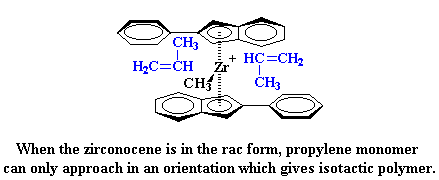
So what does this mean for our polymerization? It means something really strange will happen. When the zirconocene is in the rac form, poly propylene monomer can only approach in an orientation which will give isotactic polypropylene.

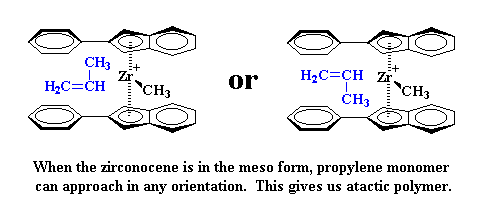
But when the zirconocene flips and becomes the meso form, propylene monomer can approach in any orientation. This will give atactic polypropylene.
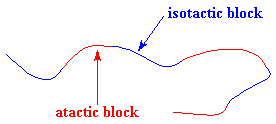
Remember that the zirconocene is constantly flipping back and forth between the two forms. It even does this while polymerization is taking place. This means that the same polymer chain will end up having blocks that are atactic and blocks that are isotactic, like this:

This kind of polypropylene is called elastomeric polypropylene because that's what it is, an elastomer. But there's more. It is a special kind of elastomer called a thermoplastic elastomer. To learn more about why this wacky kind of polypropylene works as an elastomer, visit the polypropylene page and the thermoplastic elastomer page!


Reference of this text is: http://www.pslc.ws/


برچسب‌ها: کاتالیزورهای متالوسن
+ نوشته شده در  جمعه سیزدهم اردیبهشت ۱۳۹۲ساعت 15:22  توسط Polymer Eng. Corp  | 
پلیمریزاسیون زیگلر - ناتا برای مونومرهای وینیلی .  Ziegler-Natta polymerization is a method of vinyl


Ziegler-Natta polymerization is a method of vinyl polymerization. It's important because it allows one to make polymers of specific tacticity. It was discovered by two scientists, and I think we can all figure out what their names were. Ziegler-Natta is especially useful, because it can make polymers that can't be made any other way, such as linear unbranched polyethylene and isotactic polypropylene. Free radical vinyl polymerization can only give branched polyethylene, and propylene won't polymerize at all by free radical polymerization. So this is a pretty important polymerization reaction, this Ziegler-Natta stuff.

So then how does it work? Something like this: Take your Ziegler-Natta catalyst, usually TiCl3 or TiCl4, along with an aluminum based co-catalyst, and place in the monomer at midnight on the night of the full moon. Then place the beaker on the ground in a circle of lighted candles, and then write the word "isotactic" or "syndiotactic", depending of the tacticity you desire, in runic letters on the side of the beaker with the blood of a freshly slain goat. The goat must be less than one year old, and without blemish. Then one must recite aloud the Ziegler-Natta incantation seven times, followed by the tacticity dance. If the polymerization is successful, a cold and violent wind will quickly arise and extinguish the candles, and then die away as quickly as it arose. It is important that one fast for three days before and after carrying out the ceremony. Following this little procedure usually does the trick.

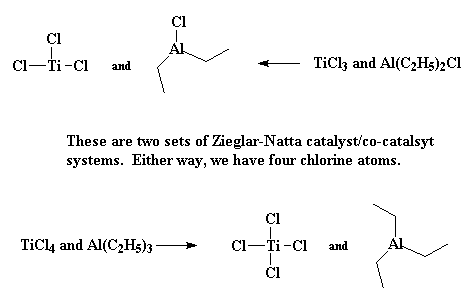
Ok, so that's not really how it works, but our knowledge of how Ziegler-Natta polymerization works, and why one initiator system will work better than another is rather limited. Picking the right conditions to make a Ziegler-Natta polymerization work often feels more like magic than science. But we do know a little bit. We know that it involves transition metal catalyst, like TiCl3. We also know that co-catalysts are involved, and these are usually based on group III metals like aluminum. Most of the time our catalyst/co-catalyst pair are TiCl3 and Al(C2H5)2Cl, or TiCl4 with Al(C2H5)3.

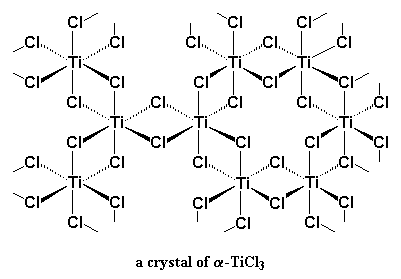
To make things simple, we'll worry about the TiCl3 and Al(C2H5)2Cl system. It helps to know something about TiCl3 to know how the system works to make polymers. TiCl3 can arrange itself into a number of crystal structures. The one that we're interested in is called α-TiCl3. It look something like this:
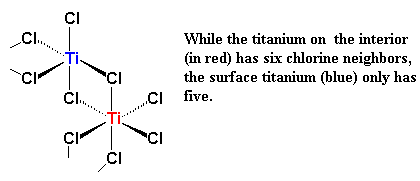
As we can see, each titanium atom is coordinated to six chlorine atoms, with octahedral geometry. That's how titanium is happiest, when it's coordinated to six other atoms. This presents a problem for the titanium atoms at the surface of the crystal. In the interior of the crystal, each titanium is surrounded by six chlorines, but on the surface, a titanium atom is surrounded on one side by five chlorine atoms, but on the other side by empty space!
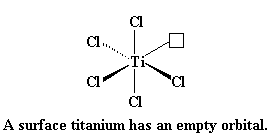
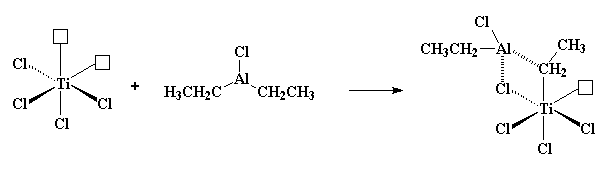
This leaves poor titanium a chlorine short. Can't it just deal with it and get on with its life? Well, no. You see, titanium is one of those transition metals, and what do we know about transition metals? We know that they have six empty orbitals (resulting from one 4s and five 3d-orbitals) in their outermost electron shells. To be happy, titanium has to be coordinated with enough atoms to put two electrons in each of the orbitals. The titanium atom on the surface of the crystal has enough neighbor atoms to fill five of the six orbital. We're left with an empty orbital, shown as an empty square in the picture below.
Now this state of affairs can't go on. That titanium wants to fill its orbitals. But first, Al(C2H5)2Cl enters the picture. It donates one of its ethyl groups to the impoverished titanium, but kicks out one of the chlorines in the process. We still have an empty orbital. But more about that in a moment.
As you can see in this picture, the aluminum has a hard time letting go. It stays coordinated, though not covalently bonded, to the CH2 carbon atom of the ethyl group it just donated to the titanium. Not only that, but it also coordinates itself to one of the chlorine atoms adjacent to the titanium. But titanium still has one empty orbital left to be filled.

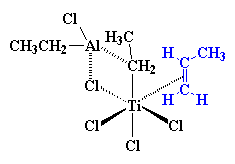
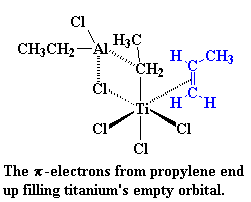
So then a vinyl monomer like propylene comes along. There are two electrons in the π-system of a carbon-carbon double bond. Those electrons can be used to fill the empty orbital of the titanium. We say that the propylene and the titanium form a complex, and we draw it like this:

But complexation is a rather complicated process, not nearly as simple as this picture implies. Those who want the whole story can read how this complexation works, and those who want the short version, can skip straight to the polymerization:

Learn about alkene-metal complexation
Skip to the polymerization

Alkene-metal complexes

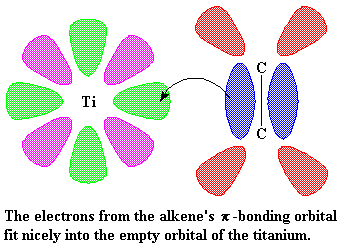
This is where it starts to get interesting. Suppose at this point that a vinyl monomer showed up, let's say, a molecule of propylene. The titanium is going to enjoy this. To understand why, let's take a look at vinyl monomer, specifically, its double bond. A carbon-carbon double bond, is made up of a σ bond and a π bond. We're going to take a closer look at that π bond.
Take a look at the picture and you'll see that the π bond consists of two π-orbitals. One is the π-bonding orbital (shown in blue) and the other is the π-antibonding orbital (shown in red). The π-bonding orbital has two lobes sitting between the carbon atoms, and the π-antibonding orbital has four lobes, sticking out away from the two carbon atoms. Normally the pair of electrons stays in the π-bonding orbital. The π-antibonding orbital is too high in energy, so under normal circumstances it's empty.

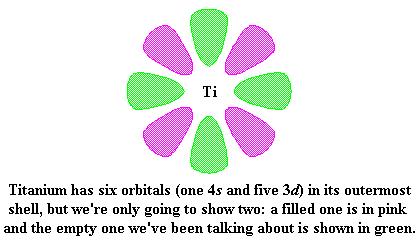
Let's look again at titanium for a moment. This picture shows titanium and two of its outermost orbitals. (Yes, it has more than two, but we're only going to show two right now for clarity.)

One of the titanium orbitals that we've shown is that empty orbital. It's made of the green lobes. The pink lobes are one of the filled orbitals. That empty orbital is going to look for a pair electrons, and it knows just where to look. It knows that the alkene's π-bonding orbital has a pair that it will share. So the alkene's π-bonding orbital and the titanium's d-orbital come together and share a pair of electrons.
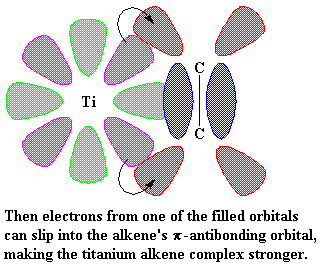
But once they're together, that other orbital (the pink one) comes mighty close to that empty π-antibonding orbital. So the titanium orbital and the π-antibonding orbital share a pair of electrons, too.
This additional sharing of electrons makes the complex stronger. This complexation between the alkene and the titanium sets things up for the next step of the polymerization.

The Polymerization

Part One: Isotactic Polymerization

The precise nature of the complex between the titanium and the propylene is complicated. So to make things simple we're going to just draw it like we did earlier from now on, like this:

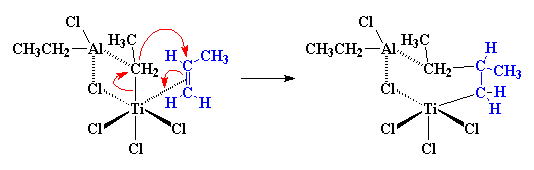
This is a nice complex, neatly solving the problem titanium had with its d orbitals not having enough electrons. But it can't go on like this. You see, that complex isn't going to stay that way forever. Some electron shuffling is going to happen. Several pairs of electrons are going to shift positions. You can see the shifting in the picture below:
We don't know exactly which pairs shifts first, but we think the first to move is that pair from the carbon-carbon p-bond that is complexed with the titanium. It's going to shift to form simple titanium-carbon bond. Then the electrons from the bond between the titanium and the carbon of the ethyl group that titanium got from Al(C2H5)2Cl. This pair of electrons is going to shift to form a bond between the ethyl group and the methyl-substituted carbon of the propylene monomer. Got that? It's kind of tricky to put into words, but we end up with the structure you see on the right side of the picture up there.

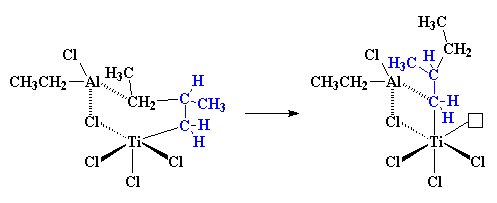
What happens next is what we call a migration. We don't know why this happens, we just know it happens. But the atoms rearrange themselves to form a slightly different structure, like this:

The aluminum is now complexed with one of the carbon atoms from our propylene monomer, as you can see. As you can also see, titanium is back where it started, with an empty orbital, needing electrons to fill it.

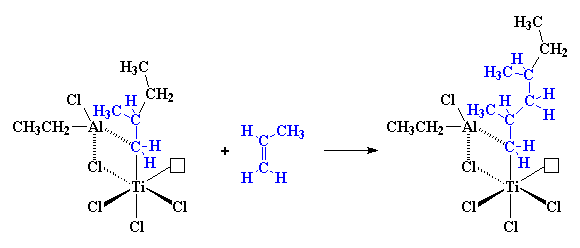
So when another propylene molecule comes along, the whole process starts all over, and the end result is something like this:

and of course, more and more propylene molecules react, and our polymer chain grows and grows. Take a look at the picture, and you'll see that all the methyl groups on the growing polymer are on the same side of the chain. With this mechanism we get isotactic polypropylene. For some reason, the incoming propylene molecule can only react if it's pointed in the right direction, the direction that gives isotactic polypropylene. We're not sure why this happens, we just know that it happens.

If you want to see a movie of isotactic Ziegler-Natta polymerization, click here!

Part Two: Syndiotactic Polymerization

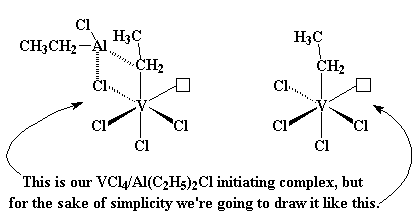
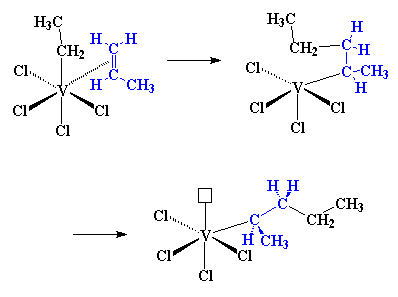
The catalyst system we just looked at gives isotactic polymers. But other systems can give syndiotactic polymers. The one we're going to look at is based on vanadium rather than titanium. That system is VCl4/Al(C2H5)2Cl. It looks like the picture you see on the left, not too different from the titanium system we just looked at. But to simplify things, during this little discussion we're going to just draw what you see on the right.

This complex will act pretty much the same way as the titanium system does when a propylene molecule comes its way. First the propylene complexes with the vanadium, then the electrons shift just like before, and the propylene is inserted between the metal and the ethyl group, just like before. This is all shown in the picture below.
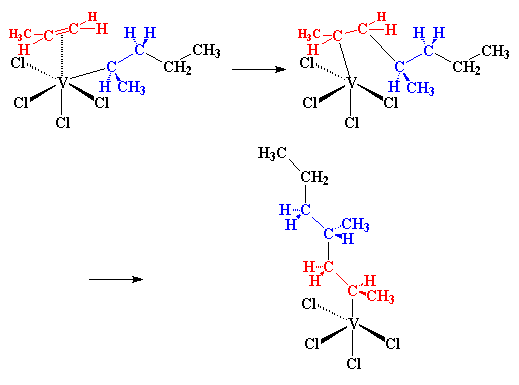
but you can also see an important difference in this picture. Remember how with the titanium system, the growing polymer chain shifts positions on the titanium atom? You'll notice that doesn't happen here. The growing polymer chain stays in its new position. That is, until another propylene molecule comes along. This second propylene reacts while the growing chain is still in its new position, just like you see below:
But notice that when the second propylene adds to the chain, the chain changes position again. It's back in the position where it started. Take a look at the methyl groups of the first monomer, in blue, and the second monomer, in red. Notice that they're on opposite sides of the polymer chain. When the growing polymer chain is in one position the propylene monomer can only add so that the methyl group is on one side of the chain. When the chain is in the other position, propylene can only add so that the methyl group hangs off the other side. We're not exactly sure why this is. But we do know that because the growing polymer chain switches positions with each propylene monomer added, the methyl groups end up on alternating sides of the chain, giving us a syndiotactic polymer.

If you'd like to see a movie of how syndiotactic Ziegler-Natta polymerization takes place, click here!

Limitations

Ziegler-Natta polymerization is a great way to make polymers from hydrocarbon monomers like ethylene and propylene. But it doesn't work of for some other kinds of monomers. For example, we can't make poly(vinyl chloride) by Ziegler-Natta polymerization. When the catalyst and cocatalyst come together to form the initiating complex, radicals are produced during intermediate steps of the reaction. These can initiate free radical polymerization of the vinyl chloride monomer. Acrylates are out, too, because Ziegler-Natta catalysts often initiate anionic vinyl polymerization in those monomers.

Moving Forward

For a long time, Ziegler-Natta polymerization was the most useful and versatile reaction for producing polymers of a specific desired tacticity. But recently a new type of polymerization, also using metal complexes as initiators, has been developed, called metallocene catalysis polymerization. It's hot, so go read about it!

+ نوشته شده در  جمعه سیزدهم اردیبهشت ۱۳۹۲ساعت 15:17  توسط Polymer Eng. Corp  | 

هندبوک افزودنی های پلاستیک ها (کتاب آنلاین از کتابخانه گوگل) - Plastics Additives Handbook  By Ralph

با کلیک کردن بر روی لینک زیر کتاب هندبوک افزودنی های پلاستیک ها (پلیمرهای ترموپلاستیک) را به صورت آنلاین مطالعه فرمایید یا جهت مطالعه اینجا را کلیک کنید.

Plastics Additives Handbook

 By Ralph D. Maier, Michael Schiller

for reading the handbook of "Plastics Additives Handbook" in Google library by Ralph D. Maier, Michael Schiller you can click on above link or click here


برچسب‌ها: افزودنی های پلیمری, polymer additives, handbook, هندبوک
+ نوشته شده در  چهارشنبه چهارم اردیبهشت ۱۳۹۲ساعت 21:32  توسط Polymer Eng. Corp  |